
Why the Renaissance Still Speaks to Our Time
A long-lost masterpiece on display in London reveals how art endures not as a fossil of beauty, but as a source of civic insight.
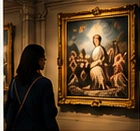
A long-lost masterpiece on display in London reveals how art endures not as a fossil of beauty, but as a source of civic insight.
The Renaissance speaks to the present in this column through the act of looking carefully at an unfamiliar world. A painting can reveal how a society arranged status, devotion and public identity without becoming a simple illustration of history. Its beauty does not erase those questions; it invites them.
The imagined exhibition gives visitors enough context to notice the distance between the artist’s assumptions and their own. That encounter can be more valuable than a claim that people have always thought alike. Art endures partly because later audiences find new questions to bring to it.
Illustrated inaugural edition · Fictional editorial copy