Technology & AI

From Hype to
Real Value:
AI Enters a More
Mature Phase

Companies move beyond experiments to deliver measurable productivity gains, even as leaders warn that success will depend on disciplined implementation and a skilled workforce.

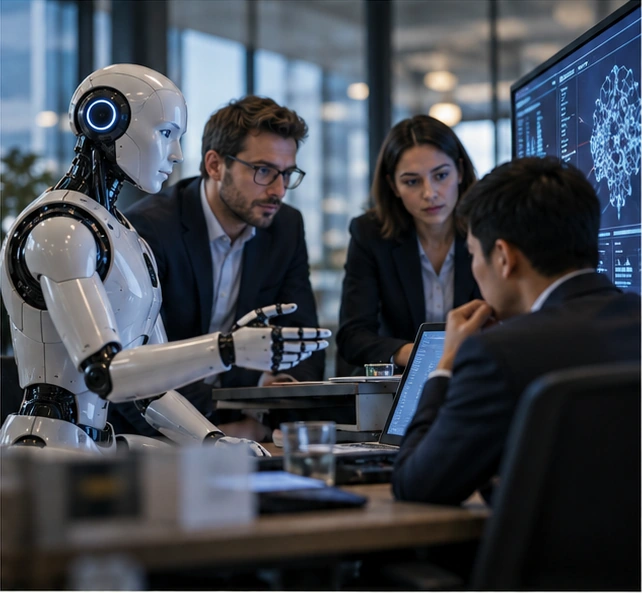
A team working alongside an AI-powered robot assistant
A company team works with an AI-powered assistant in a strategy session at a European headquarters, as businesses seek measurable returns from artificial intelligence.Illustration · The Daily Ledger

BRUSSELS — After years of breathless promises, artificial intelligence is entering a more pragmatic era, with companies and governments focused on measurable economic value rather than hype.

Across industries, from manufacturing to finance and healthcare, organisations are scaling AI from pilot projects to core operations, reporting clear gains in productivity, cost efficiency and service quality. But leaders say the next phase will be harder, requiring governance, workforce training and careful integration with legacy systems.

“The easy wins are behind us,” said a senior executive at a European industrial group. “Now the question is how to make AI work at scale — responsibly, and with real value for workers, customers and the wider economy.”

The technology lead follows a fictional manufacturer that has moved an AI assistant from a demonstration room onto the service desk. It retrieves maintenance instructions and drafts responses, but every answer includes the documents used. The project has an owner, a budget and an agreed procedure for handling uncertain output.

That shift makes integration the main story. Permissions, outdated manuals and inconsistent records can matter more than the model’s performance in a general benchmark. A mature deployment invests in those foundations and evaluates the service over time, including the cases that require a person to intervene.

Illustrated inaugural edition · Fictional editorial copy

Continued on page 5
Business

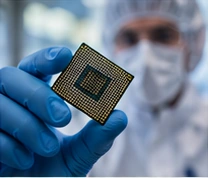
Europe Sets Out Chip Strategy to Cut Dependence
Europe Sets Out Chip Strategy to Cut Dependence

New investments and partnerships aim to strengthen Europe’s semiconductor industry and reduce reliance on Asian suppliers.

BRUSSELS — The European Union has unveiled a new wave of investments to expand domestic chip production, seeking to reduce strategic dependencies and build a more resilient supply chain for advanced semiconductors.

Security

Cybersecurity Readiness Lags Growing Threats

Cybersecurity Readiness Lags Growing Threats

New report warns that many organisations remain vulnerable despite rising attacks, calling for higher investment and stronger coordination.

LONDON — Cyberattacks are increasing in both frequency and sophistication, but a new study finds that many public and private organisations are still not prepared. Experts warn that Europe must invest more in cyber resilience.

Energy

A Cleaner, Cheaper Battery Within Reach

A Cleaner, Cheaper Battery Within Reach

Breakthroughs in battery chemistry and manufacturing could cut costs, reduce reliance on critical minerals and speed up the green transition.

BERLIN — European researchers have developed a new battery technology that uses more abundant materials, promising lower costs and a smaller environmental footprint.

Opinion
Helena Krauss

By Helena KraussColumnist

What Matters Now in Tech

The next chapter for technology will not be defined by bigger models or flashier demos, but by three things: trust, real-world value and people. Europe has the chance to shape a technology economy that is innovative, open and resilient — if it focuses on implementation over hype and invests in the skills people need at work.

Latest briefs

An illustrated edition based on the supplied designs. Stories, people and figures are editorial examples; artwork is reproduced from the reference layouts.