How Cities Are Adapting to a Hotter, Busier, More Flexible Future
From green infrastructure to reinvented public spaces, cities are finding new ways to stay livable, resilient and inclusive as climate risks rise and lifestyles change.
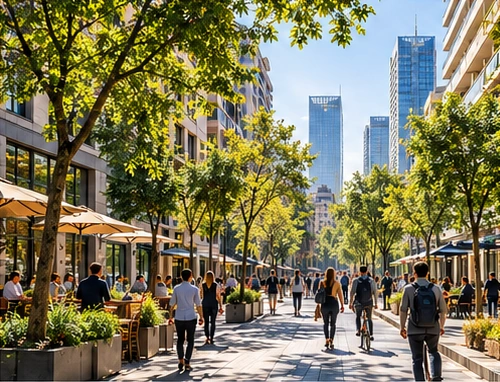
Across the world, mayors and urban planners are rethinking how cities work — investing in cooler streets, more green space, flexible housing and transit systems built for a more dynamic and diverse population. The next decade will test whether cities can turn today’s pressures into healthier, fairer and more vibrant places to live.
The city in this feature must accommodate several changes at once: hotter summers, flexible working patterns and a population with more varied household needs. An underused office district becomes a test site for mixed housing, public facilities and safer walking routes rather than a single-purpose redevelopment.
The fictional plan reserves space for schools and affordable workshops before new commercial tenants arrive. That sequencing matters because attractive streets alone cannot provide a complete neighbourhood. Adaptability is treated as an ability to change uses over time while maintaining the services that make daily life manageable.
Illustrated inaugural edition · Fictional editorial copy